
News about new printed books available on the shelves of our library.
Punishment constitutes an interference with individual rights and, at the same time, a cost for society, which is why it requires strong justification. Debates on punishment often diverge between philosophers, who emphasize abstract ethical considerations, and legal scholars, who tend to describe existing systems of criminal sanctions. In doing so, important distinctions are often overlooked, such as those between descriptive accounts and normative justifications of punishment, and between its purposes and its legitimacy. The monograph Teorija kazni by Matjaž Ambrož seeks to clarify these dilemmas, present the contemporary development of theories of punishment, and critically evaluate them. It is intended for students and legal professionals who wish to understand punishment as a complex and open question.

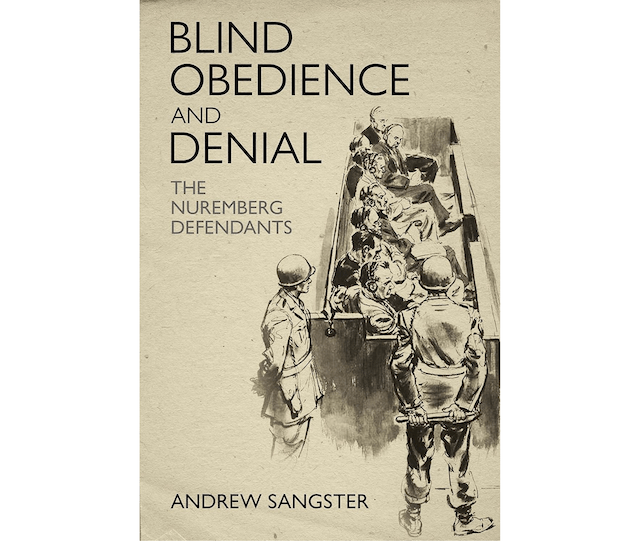
The book Blind Obedience and Denial: The Nuremberg Defendants offers an in-depth yet accessible insight into the Nuremberg trials, focusing on all 23 defendants, not just the most well-known. Andrew Sangster outlines the legal framework and course of the trial, while also highlighting contradictions in the Allied prosecution. He analyzes the role of genocide as the central charge and the ways in which the defendants defended themselves, as well as their interpersonal dynamics, particularly the influence of Göring. Drawing on trial records, interrogations, and psychiatric evaluations, the book reveals their thinking, their attitudes toward Nazism, and their confrontation with responsibility at the end of the war.
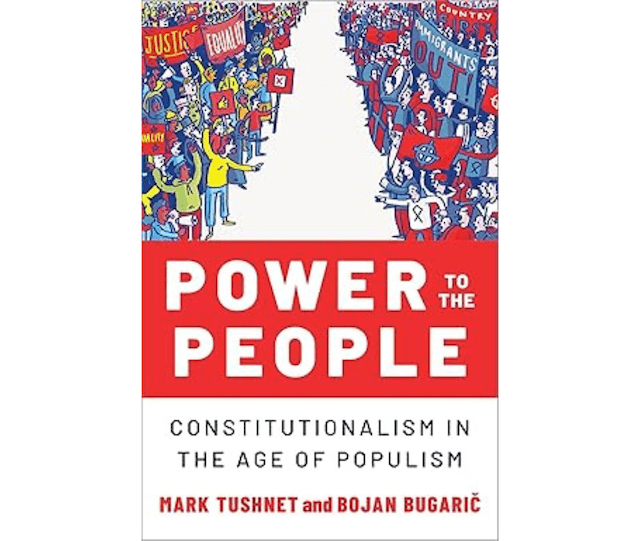
The book Power to the People: Constitutionalism in the Age of Populism examines the relationship between populism and constitutionalism, rejecting the claim that they are inherently incompatible. The authors, Bojan Bugarič and Mark Tushnet, introduce “thin” definitions of both concepts that can be accepted across different political perspectives. They show that one feature of populism—its distrust of deeply entrenched institutions—is sometimes in tension with constitutionalism, but not always. Through comparative case studies, they analyze when and how populist programs conflict with constitutionalism and when they are compatible with it. In conclusion, they discuss the possibilities for developing a more inclusive, populist democracy and propose new institutional solutions that would allow the will of the majority to be implemented without undermining the constitutional order.