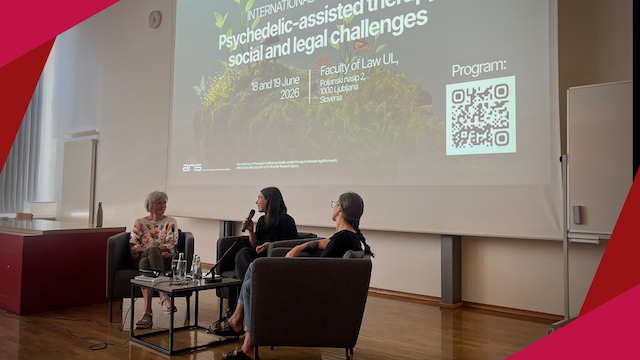

The conference was organised within the framework of the research project Unofficial psychedelic-assisted therapy in Slovenian legal framework,(J5-50170) by the Faculty of Law, University of Ljubljana and the Institute of Criminology at the Faculty of Law Ljubljana.
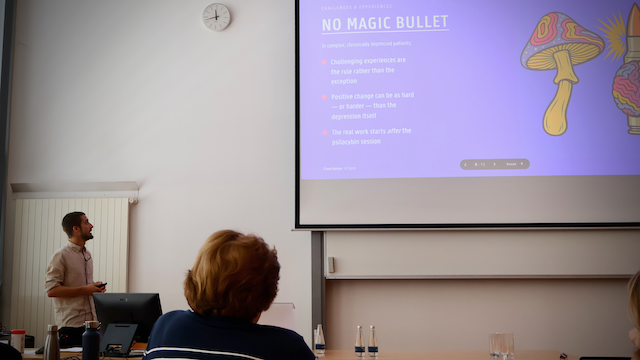
On the first day of the conference, researchers from the Institute of Criminology and the Faculty of Law presented the findings of an empirical study on the use of psychedelics and public attitudes towards them in Slovenia. The study indicates that both the general public and professional communities increasingly recognise the potential of psychedelics in the treatment of certain mental health conditions, particularly depression, anxiety disorders, and post-traumatic stress disorder (PTSD).
Participants were also introduced to data from the European Union Drugs Agency on the prevalence and patterns of psychedelic use across EU Member States, as well as findings from international studies examining the therapeutic use of various psychedelic substances, including their potential applications in the treatment of addiction and treatment-resistant depression.
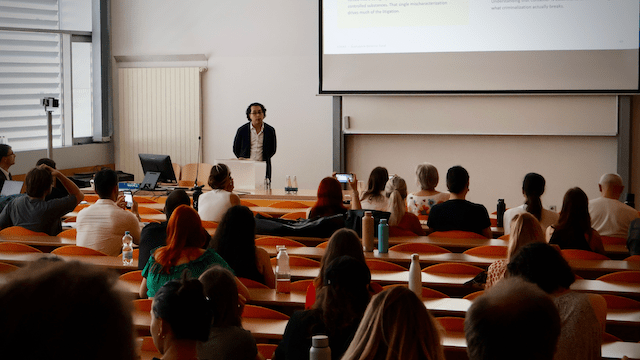
Over the course of the conference, speakers addressed a range of legal, social, and public health issues related to psychedelics. Particular attention was given to the challenges arising from the inadequate legal treatment of traditional psychoactive healing plants. Participants also discussed harm reduction approaches in relation to the growing number of ayahuasca ceremonies conducted for spiritual purposes.
Participants agreed that the responsible development of future policies requires an open, interdisciplinary, and evidence-based dialogue that integrates legal, health, and social perspectives on psychedelic use.


